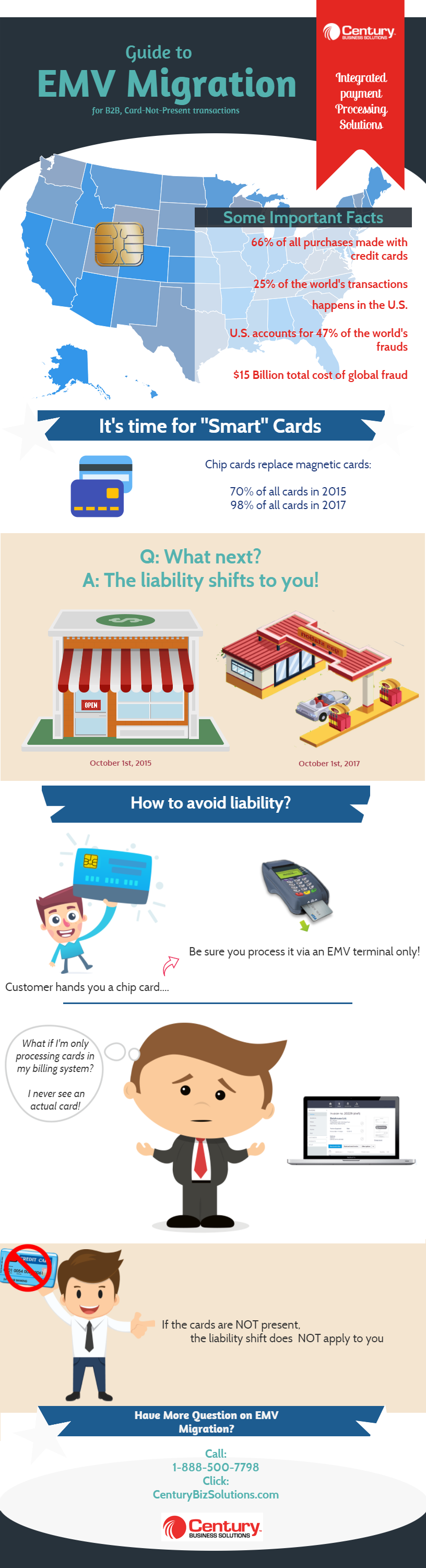
 emv-cnp-and-liability-shift
Showing posts with label emv chips. Show all posts
Showing posts with label emv chips. Show all posts
Monday, October 19, 2015

Friday, February 20, 2015
3 Cash-Saving Tips For Adult Merchant Account Owners
Do you have an adult merchant account?
 |
| Yes, you! |
As someone doing business and taking credit cards in the adult industry, I'm sure you've heard just about everything in the book - and, I'm also sure a lot of it's negative crap, too. Adult industries and adult merchant account owners in particular get the short end of the stick in today's wonderfully ambivalent, ambiguously sexualized-but-wait-not-really world we're a part of. When it comes to adult credit card processing, it's a freaking jungle out there. What are you to do?
This post is here to help address common problems adult merchant account owners or would-be-owners have with getting decent, competitive costs on their credit card processing. It's a little more difficult to do than it is for run-of-the-mill businesses, but it's attainable. Read on!
How to get decent rates on your adult merchant account
 |
| Take notes, 'cause this might be on the final. |
Suggestion 1: Take control of your chargebacks by obtaining extra information
One of the chief reasons an adult merchant account is considered part of a high risk business is because of the chargebacks you'll often incur. Chargebacks occur when customers (claim they) aren't satisfied with your products or, more often, when they don't remember ordering them, so they file a dispute with their credit card provider looking to get their money back for the product they ordered from you. Winning a chargeback battle can be difficult if you don't provide adequate information about the credit card and transaction itself, so you should be absolutely sure to:
- Make sure your customer gives you the CVV code from the back of his credit card. This is just another piece of information that helps verify the card wasn't being used fraudulently.
- Make sure the customer gives you his billing address. You'd want this for the same reason you'd want a CVV code.
- For retail adult stores, invest in EMV technology. EMV isn't mandated yet, and, certainly not everyone uses EMV credit cards yet, but, when the time comes, EMV will reduce fraud pretty significantly because EMV credit cards are inherently harder to replicate. An EMV-enabled terminal costs you $200 or so. It's a great investment.
Supplying the extra detail and using EMV card readers won't help you win every chargeback, but it will help you win more than you're winning now. And, fewer chargebacks mean lower costs for you because your processor doesn't need that extra insurance against your would-be fraudulent transactions. Everybody wins.
 |
| Don't let this happen to your poor customers. |
Suggestion 1a (or 2): For retailers, give your business an innocuous-sounding name so your customers (or their significant others) don't freak out at their monthly statement
This may seem silly, but it can help reduce chargebacks as well. You may not be able to control what products of yours your customer chooses to bring home, but you can control how your business is presented on his credit card statement. Regardless of the actual name of your establishment, which I recommend you keep so as not to turn away legitimate business, you can choose to you have your adult novelty business show up differently on someone's credit card billing statement. Using the name of a bookstore or referencing the name of the street address of the business are both tactics you can use. Be a little creative!
 |
| Why isn't this you yet? |
Suggestion 3: For wholesalers and manufacturers, use a processing method that can obtain the best base costs on business-type credit cards
Some business owners aren't aware that business cards have a few different set acceptance costs based on how much extra information is provided along with each transaction - that is, the more information you provide, the less you have to pay. And, of the business owners who do know about these lower costs, not everyone knows if their gateway will accept the information, or even how to do it. Here's what I suggest:
- If you don't use a virtual gateway for credit card processing (i.e. you're still keying cards into your black box terminal), start there.
- If you do use a virtual gateway, ask your processor if you're getting the lowest costs for business-type credit cards. They may be able to help you.
- If you know you're getting some discounts from card qualifications, ask your processor what steps you can take to get all the business-type cards you take to qualify correctly. They may be able to help with that, too.
- If your processor is unable to help you, it may be time to choose another credit card processor.
This is another solution that isn't the entire package but will help lower your costs somewhat. Again, this is only pertinent to wholesalers, distributors, and manufacturers.
I know it's a little harder than usual to get decent credit card processing as someone who wants an adult merchant account, but, it can be done. Cost savings are part of the battle, and, by at least utilizing point 1, you'll be doing both yourself and your processor a huge favor, because without the chargebacks, your risk level drops significantly.
Happy trails,
Jeremy
Thursday, December 4, 2014
What on earth is EMV?
 |
| He's ready to learn. Let's get moving. |
These days,
EMV chips are all the rage in Europe, and, with their official USA ETA in
October 2015, they’re coming on over to stay in the United States as well. You might have an EMV card now, or maybe you’ve
seen a few of your customers present them to you for payment. But, aside from looking high-tech and probably having to do with security,
just what’s going on with these EMV chips? Here are five quick details to take with you.
1. EMV chips don’t significantly change
how cards are used, but they really only work for card-present transactions
As the EMV
chip is a physical feature of a card, it interacts with another physical object
for its security: an
EMV chip reader. For card-not-present
transactions, all information is transmitted manually over a phone line or the
internet, so the chip’s security won’t have any use at all in those situations.
Aside from the physical aspect of having
EMV chips, newer credit cards look the same as their older counterparts. (Eventually, the magnetic stripe on EMV cards
will fall out of use as businesses update their hardware, as all pertinent
transaction information can be gathered through an EMV chip anyway.)
2. The EMV shift will cost businesses
and banks a good deal to implement
Replacing a couple of credit card
terminals might be annoying, but it isn’t terribly expensive–I’ve seen
EMV-equipped terminals for $300, give or take about $50. But, what if you
own a retail store with four credit
card terminals? What if you operate an independent grocery store and you
need to replace ten? Considering those possibilities, it’s no wonder many
business owners are trying to shelve their updates for as long as possible. And, it isn’t just retail businesses that are
feeling the pain. Banks have their work cut out for them, what with the nearly
billion older credit cards in
circulation now. And, let’s not forget
their ATMS, which will all have to be
equipped to read new EMV debit cards.
3. October 2015 is the deadline to
update your card-reading hardware, but you probably won’t see overall
compliance until much later
October 2015
marks the liability shift—the point
at which businesses become responsible for fraudulent charges resulting from
EMV-equipped credit cards used with standard mag stripe-reading terminals. Some businesses will be slow to adapt to the
new rules, however dire the punishment for not doing so, simply because of the
expense of updating hardware. You may
very well have $1200 lying around to spend on four new EMV terminals, but, you
may not want to part with it because you don’t see the need—not yet, anyway,
because you haven’t been hit by fraud… It’s a waiting game, though.
4. EMV chips do prevent fraud nicely,
but it’s still possible to pull a fast one on card-issuing banks
In October
of this year, a fraudster team in Brazil reportedly captured credit card data
from a real EMV-equipped credit card, and then manipulated information like
credit card numbers, issuing banks, and acquirer IDs, to fabricate other
transactions on the fly that looked quite real with the addition the captured
EMV information. According to this
article, the fraudsters played off the notion that banks’ fraud controls
would be looser for EMV-signed transactions—and, indeed, they were, as banks
automatically approved the charges due to the presence of the additional EMV
information, however false it was. These
so-called replay attacks aren’t so
common, but can occur from time to time if someone’s head is turned away at the
wrong time.
5. There are two different potential EMV
systems to put in play, each with distinct advantages and disadvantages
When
businesses choose to upgrade to EMV technology, they will have another choice
to make: whether to use a chip-and-PIN
system or a chip-and-signature system.
Chip-and-PIN systems are the inherently more secure option because their
requiring a PIN (verified by the EMV chip) with every transaction makes it
much, much harder for thieves to use a card fraudulently at that kind of credit
card terminal. As expected, a
chip-and-PIN system requires the use of a special PIN pad, which costs businesses
money to use. Bearing that in mind,
there is another, somewhat less secure method businesses can use to secure
their EMV transactions: the chip-and-signature system. The major factor chip-and-signature systems
bring to the table is their lack of a
PIN feature. Signatures add a small veil
of security, much like signatures for purchases with conventional credit cards,
but the problem is signatures can always be replicated, and, as anyone who’s
ever used one of those battered electronic styli and pads at a grocery store
can attest, it really doesn’t matter what the hell you sign. Predictably, businesses tight on cash will
opt for the less secure chip-and-signature method in the interest of cutting
costs—until they’re affected by fraud themselves. So it goes!
By now you
understand I’m full of it; brevity isn’t my strong suit
Those weren’t
fast facts at all, but, hopefully they were substantial facts and you come away
from this ready to win some bar bets. In
all seriousness (I know! In this
blog?!), EMV is a big deal because it’s the first real update to the credit
card itself since its (mainstream) inception in the ‘70s. Cards are going to look a little different,
and business owners and banks will have to front the cost of these upgrades;
that’s just the system we’ve built.
Security will likely be much better in the future, though, and we won’t
have as many of these nasty fraud stories to talk about.
Cheers,
Jeremy
Subscribe to:
Posts (Atom)