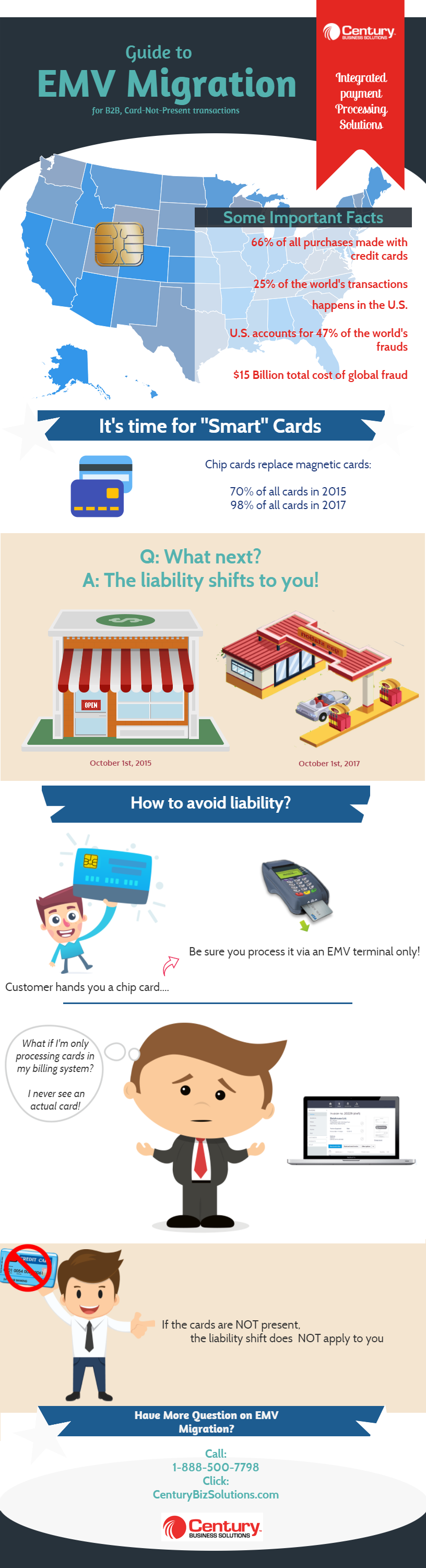
 emv-cnp-and-liability-shift
Showing posts with label virtual gateways. Show all posts
Showing posts with label virtual gateways. Show all posts
Monday, October 19, 2015

Wednesday, March 25, 2015
3 Tips For Managing Cash Flow

If you aren’t an accountant – and, okay, even if you are –
managing cash flow can be a daunting task.
Cash flow management, essentially keeping your money as long as possible
and being able to project how much of it is headed for your pockets at any
given time, serves a few purposes. It’s a
great forecasting tool and a fine way to keep your business healthy, and, scary
as it might seem, it’s important to get a feel for it. Let’s just dive right in, shall we? I promise it’ll be fun, and, we won’t go too
far into the deep end J
#1: Project it Correctly
Projecting how much money you’ll have at any given time (or,
for starters, just one specific time in the future) is important because it
allows you to make other big decisions and, as the name would suggest, plan or
project for the future. Were you
thinking of upgrading a piece of machinery in your warehouse? Maybe thinking of changing vendors for a
specific product? Perhaps you’re even
considering giving your employees raises.
Relying on numbers your accountant prepares for you is perfect, but, if
you’re your own accountant, you’ll have to learn to project cash flow yourself. You’ll have to make educated guesses about a
number of things, including your customers’ payment histories and upcoming
expenses.
Here’s what you can do in two detailed steps:
- You’ll have to add up all of your cash on hand, plus the cash you expect to get from various other sources later on. You’ll need to talk to all of your Sales team, Service or Support members, and of course your Credit or Finance department. You’ll be asking the same question of all of them: How much cash (in its various forms, payments, interest, fees, etc.) are we going to get, and when are we going to get it?
- You’ll then need to assess when your cash is going to be spent, and on what. The more line item detail you have, the better – and, that includes items rent, utilities, inventory, salaries and wages, benefits, standard office supplies, advertising… Everything you spend money on for your business, really.
If you can be very thorough in your research (or just very
honest with yourself in how your business spends its money), this is all you’ll
need to do. It’s a difficult
undertaking, to be sure, but, if you can prepare one of these cash flow projections per quarter
(or, more or less frequently, depending on your preference or your financial
state), you’ll know exactly how much room you have to make other adjustments, like the aforementioned big purchases, raises,
or anything else you might want to do.

#2: Improve Your Receivables
If you got paid for things the minute you sent out invoices,
you’d never have any cash flow problems.
That’s usually not how it works, unfortunately. Bearing that in mind, there are certain
things you can do to ensure you get your money a little more quickly, if not
instantly; you can start by making tweaks at the inventory level and making
other adjustments at the customer level.
For example:
- If you have old inventory, don’t just keep it around – sell it for whatever you can get.
- Invoice customers as soon as possible, and follow up promptly if you sense any sluggishness.
- Automate payments whenever possible, Whether this means putting customers on a recurring payment subscription plan or simply using integrated credit card processing that plugs into your accounting system, this will get you your money more quickly. In the case of using integrated payment processing, or even a virtual gateway, you'll save time every day too, which can translate to monetary savings in increased productivity.
- Ask that customers make deposits on orders as soon as they’re taken; identify customers that have a history of paying you slowly and institute a COD (collect on delivery) policy. If you’re not sure how to do that, an outside service like UPS can help. If this doesn’t help, you can simply refuse doing business with those customers until you can be certain they’ll pay you on time.
- Incentivize on-time or early payments by offering a small discount.
For a closer look at improving receivables cash flow, this piece on avoiding
late payments from customers touches on similar ground and provides some
additional tips too.
#2a: Improve Your Payables
If your sales are good, you might think everything in your
business is hunky-dory – unfortunately, that isn’t usually how it works either. Great sales can hide problems originating in
your expenses, so it does good to pay close attention to how much money is
leaving your pockets and when. Here are
some things you can do to lessen the strain and keep money in your pocket
longer:
- Take advantage of payment terms to the fullest extent. That means if a creditor or vendor demands a payment in 15 days, don’t make it in 10.
- If vendors offer you discounts for early payments, consider whether or not a discount will help you before jumping on their offers. If you need to hold onto your money, you may want to let it ride until the payment becomes absolutely necessary.
- Rather than send payments via post, use electronic transfers to make payments on things the day they’re due.
- Don’t choose vendors simply on the basis of price. Vendors with payment terms that serve you in your financial situation may be better for business overall than vendors with rock-bottom prices that need their payments now.
Let your vendors know about your cash flow situation if
necessary. If you ever need to put off
making a payment, at the very least the vendors will have advance warning, and
they may even be sympathetic.

#3: Survive Real Deficits
While tip #2a is designed to help prevent cash shortages,
sometimes it just isn’t enough and you end up in the red anyway. This doesn’t mean you’re a bad person or you’ve
failed as a businessperson – it just means you couldn’t accurately predict the
future, and, until we humans develop some form of ESP, you’re off the hook for
that one. Not being able to pay a bill
is a completely normal situation, and, there are some measures you can take to
lessen the stress from a bad cash flow situation like this, too:
- Preventative loans help a great deal, but, banks will be much more apt to lend you money if you ask for it in advance – the longer time you give yourself, the better. If you come to a bank asking for money you need that day, you’ll likely be rejected. (You can approach third-party loan companies for next-day loans, but you’ll incur astronomical interest rates, so I would advise against this unless absolutely necessary.)
- Your bank will come in handy for more than just loans. You can arrange for your bank to give you a line of credit, which allows you to borrow money (like a credit card) up to a certain limit. I would take the time to open a line of credit even if you don’t anticipate being in the red – it’s just a good business practice, akin to carrying a personal credit card in case of an emergency.
- Ask your suppliers for help if you can’t get it from the bank, as those vendors probably know you and your business better than your bank does, anyway. You can probably get what’s essentially a low-cost loan from vendors just by asking for it, especially if you’ve already informed them of your situation and have been a good customer in the past.
- Using factoring may help. Factoring is when you hire an outside service to collect payments on unpaid invoices for you. The factoring company is compensated by taking a percentage of your invoices, but, you’ll be paid immediately for any invoices the factoring company takes over, so this is a good way to put some money back into your pockets immediately, if only as a last resort.
- You can also ask your most promptly-paying customers to pay you more quickly, taking care to explain your situation and incentivizing them by giving them a slight, one-time discount, too. You can also go after your very late-paying customers, offering them discounts for paying quickly as well – if you can get them on the phone.
- In extreme situations, you can sell your machinery or offer your office furniture or similar assets as collateral on a loan. In these situations, be sure to make your payments on time or you could risk permanently losing the items you handed over.
Concluding Thoughts on Managing Cash Flow
Okay, so I lied a little in the beginning. Cash flow management isn't such a fun topic unless you're thoroughly in the black - and, even then, you need to continue to perform cash flow projections to ensure you remain there. As long as you follow the steps here, you should be at least armed with some good information that will help you in the future.
Friday, February 20, 2015
3 Cash-Saving Tips For Adult Merchant Account Owners
Do you have an adult merchant account?
 |
| Yes, you! |
As someone doing business and taking credit cards in the adult industry, I'm sure you've heard just about everything in the book - and, I'm also sure a lot of it's negative crap, too. Adult industries and adult merchant account owners in particular get the short end of the stick in today's wonderfully ambivalent, ambiguously sexualized-but-wait-not-really world we're a part of. When it comes to adult credit card processing, it's a freaking jungle out there. What are you to do?
This post is here to help address common problems adult merchant account owners or would-be-owners have with getting decent, competitive costs on their credit card processing. It's a little more difficult to do than it is for run-of-the-mill businesses, but it's attainable. Read on!
How to get decent rates on your adult merchant account
 |
| Take notes, 'cause this might be on the final. |
Suggestion 1: Take control of your chargebacks by obtaining extra information
One of the chief reasons an adult merchant account is considered part of a high risk business is because of the chargebacks you'll often incur. Chargebacks occur when customers (claim they) aren't satisfied with your products or, more often, when they don't remember ordering them, so they file a dispute with their credit card provider looking to get their money back for the product they ordered from you. Winning a chargeback battle can be difficult if you don't provide adequate information about the credit card and transaction itself, so you should be absolutely sure to:
- Make sure your customer gives you the CVV code from the back of his credit card. This is just another piece of information that helps verify the card wasn't being used fraudulently.
- Make sure the customer gives you his billing address. You'd want this for the same reason you'd want a CVV code.
- For retail adult stores, invest in EMV technology. EMV isn't mandated yet, and, certainly not everyone uses EMV credit cards yet, but, when the time comes, EMV will reduce fraud pretty significantly because EMV credit cards are inherently harder to replicate. An EMV-enabled terminal costs you $200 or so. It's a great investment.
Supplying the extra detail and using EMV card readers won't help you win every chargeback, but it will help you win more than you're winning now. And, fewer chargebacks mean lower costs for you because your processor doesn't need that extra insurance against your would-be fraudulent transactions. Everybody wins.
 |
| Don't let this happen to your poor customers. |
Suggestion 1a (or 2): For retailers, give your business an innocuous-sounding name so your customers (or their significant others) don't freak out at their monthly statement
This may seem silly, but it can help reduce chargebacks as well. You may not be able to control what products of yours your customer chooses to bring home, but you can control how your business is presented on his credit card statement. Regardless of the actual name of your establishment, which I recommend you keep so as not to turn away legitimate business, you can choose to you have your adult novelty business show up differently on someone's credit card billing statement. Using the name of a bookstore or referencing the name of the street address of the business are both tactics you can use. Be a little creative!
 |
| Why isn't this you yet? |
Suggestion 3: For wholesalers and manufacturers, use a processing method that can obtain the best base costs on business-type credit cards
Some business owners aren't aware that business cards have a few different set acceptance costs based on how much extra information is provided along with each transaction - that is, the more information you provide, the less you have to pay. And, of the business owners who do know about these lower costs, not everyone knows if their gateway will accept the information, or even how to do it. Here's what I suggest:
- If you don't use a virtual gateway for credit card processing (i.e. you're still keying cards into your black box terminal), start there.
- If you do use a virtual gateway, ask your processor if you're getting the lowest costs for business-type credit cards. They may be able to help you.
- If you know you're getting some discounts from card qualifications, ask your processor what steps you can take to get all the business-type cards you take to qualify correctly. They may be able to help with that, too.
- If your processor is unable to help you, it may be time to choose another credit card processor.
This is another solution that isn't the entire package but will help lower your costs somewhat. Again, this is only pertinent to wholesalers, distributors, and manufacturers.
I know it's a little harder than usual to get decent credit card processing as someone who wants an adult merchant account, but, it can be done. Cost savings are part of the battle, and, by at least utilizing point 1, you'll be doing both yourself and your processor a huge favor, because without the chargebacks, your risk level drops significantly.
Happy trails,
Jeremy
Friday, December 19, 2014
MOTO Credit Card Processing is Dead
(or, 3 tips to make it in MOTO business today)

Well, you heard me.
MOTO credit card processing as it was known at its inception is
dead. What comes to mind when one
pictures MOTO credit card processing? A
businessperson typing a card number into a credit card terminal, right? The technology in those terminals is
approaching the age of dirt. And, even more importantly--because some of us enjoy collecting classic items--that old technology is responsible for 85% of the
card-not-present downgrades on monthly processing statements and 75% of the
shoddy reports generated by harried accounting staff members.
Okay, so I’m totally lying about the numbers. The point—that transactions are downgraded
terribly and reporting tools are nonexistent with physical terminals—is absolutely
valid. If there were a way to measure
shoddiness of reports as a function of harriedness of accounting staff from the
general crappiness of the quality of life due to the oldness of your physical
terminal, there would probably be a positive correlation.
MOTO credit card processing as you probably know it has
outlived its expiration date. If you
know it as something else than what I’ve described, be happy you didn’t have to
live through the golden (expensive, stressful) years. You don’t have to take notes today. However, if you have no idea what could ever
replace your credit card terminals in the scheme of your business, you’ve
arrived at the right place. It’s time to
get down and dirty.
MOTO credit card processing tips

1. With the internet all things are possible (especially improved payment technology)
The internet has improved human life tremendously—or,
rather, it’s sped everything up and made it easier to pass information
around. How does this apply to MOTO
credit card processing? Well, nowadays,
you have options other than the physical terminals you might be using. Take, for example, the virtual terminal:
 |
| If you're not familiar, it'll look something like this. Pretty nice UI, and intuitive reporting tools. |
Important to know about your virtual gateway:
- You can access your online gateway from anywhere with an internet connection, not just your office.
- Most virtual gateways are equipped with built-in searching and reporting tools, which are absolutely invaluable for copy requests, other audits, and simply reporting things at the end of the day or month.
- Some virtual gateways can be equipped to integrate to your accounting system (like QuickBooks, or wherever else you might create and reconcile invoices), which brings about a whole host of other benefits. There’s no better way to catapult your business into the 21st century than with a payment integration—and, your accounting staff will agree.
2. You can utilize payment channels other than mail and telephone
I know MOTO stands for Mail Order/Telephone Order, but in
the past decades, that business model has expanded to include online orders,
either via email or shopping cart.
Strongly consider whether or not your customers would benefit from the
addition of an email payment portal, or a web shopping cart. Maybe your website isn’t much to look at, or—good
heavens—maybe you don’t even have a website.
Whereas payment integration can help almost everyone, adding a web
shopping channel might not be for you
if you have a well-established client base and you aren’t worried about not attracting Joe Average consumers. But…I
would wager that this idea helps more businesses than it hurts. I mean, adding visibility and more payment
methods can never hurt.
 |
| Shopping carts give you access to SO much useful data! Makes me want to start my own business. |
Important to know about an online payment method for your customers:
- This is the age of automation. Usually, if people have the opportunity to use an email portal or shopping cart for payment, they will. That means orders come to you without you having to answer the phone. And, that saves time.
- You can automatically import your online payment data to your virtual gateway with information from other payment channels (like telephone) and make your reporting even easier.
- Some shopping carts (like Magento) are designed to lower the base costs of accepting certain credit cards for payment. Depending on your potential for online orders, this could be a great windfall.
3. The importance of PCI compliance can’t be overstated, so use a compliant solution
In light of the mainstream data breaches you've undoubtedly heard or read about, this point can't be stressed enough. Using a
virtual gateway or an integrated processing solution has the potential to
significantly increase your data security, and decrease your chance of becoming the next mainstream news story.

Important to know about PCI compliance:
- It’s easy to believe you’re invulnerable to hacks since you use a physical terminal—but, it simply isn’t true. Hacking into phone lines isn’t terribly difficult; an entire subculture of phreakers could attest to that in the 1980s.
- Using a virtual terminal secures your data, and, using a tokenized data solution makes the data even safer than with a conventional virtual terminal.
- Solutions like these are in high demand given the past few years—and, contrary to what you might believe, these solutions are usually available at no additional cost, as modern processors have adopted PCI compliance as a standard.
The beginning of something great
When something dies, something invariably takes its place,
and we’re witnessing the implementation of some really cool payment processing
options. (I don't know about you, but I really like it when I can get a machine or a computer program to do instantly the work I would have spent 30 minutes doing, all while offering me a higher standard of data protection.) Request a virtual terminal demo from the
merchant services provider of your choice, and talk to several companies about
what new MOTO credit card processing options will do for you. I think if you give these options a chance,
you’ll be pleasantly surprised at how much your business is improved.
Until next time,
Jeremy
Wednesday, November 26, 2014
Wanna Know What’s NOT Free? A FREE Terminal
Free terminal for you? Or, free overhead for your processor?

Every now and then, I still hear stories of merchants who get duped into signing agreements for eternally long merchant services contracts, unresponsive service, and–my favorite–credit card terminal leases. Terminal lease agreements are really something to behold because we’re talking about a very inexpensive piece of machinery here–$200, maybe $300 for a really nice, sleek-looking one. Right away, you know that if you plan to stay in business longer than 1-2 years, paying $15 per month doesn’t make any sense. And that’s just a small aspect of this terminal business. As humans, we make bad financial decisions when circumstances aren’t perfect, and some salespeople unfortunately make a killing off getting you to make a bad choice under pressure. And, while we’re on the subject of bad choices…have you heard the expression “free terminal” before now?
The truth about free terminals…
It’s important to think about why a merchant services provider would offer free machinery to its prospective clients. It’s not the same as something intangible, like a cloud-based software package or virtual gateway; while software developers put in the time and expenses into developing their product, there comes a time when the developing company will break even–or, simply offer their software product for free as a benefit. With physical card readers, however, processors do not stand to benefit in the slightest by offering free terminals, especially not as a way of enticing merchants into signing up. It’s for this reason that so, so, so much of the time, you’ll find that free terminals are accompanied by a thick merchant services contract. Usually for 36 months. And, it probably stipulates that if you decide to end your agreement before 36 months elapse, you pay for the value of about ten of those lousy terminals or the fees for your highest-volume month multiplied by the number of months left on your agreement, whichever is worse. In fact, I’ve never heard of a company that didn’t offer free terminals without some sort of string attached to the offer. Terminals are tangible items, so they always carry a cost. Processors aren’t total goof-offs–they usually find a way to pass the charge onto you. If you choose to fulfill your contract, you might not see the ugly side of the agreement–and, you may really get free machinery–but, brace yourself if you anticipate batting an eyelash at that contract.
The solution to ostensibly free terminals? Try a guaranteed non-free one, or don’t try one at all.
I try to play devil’s advocate whenever I can, so I don’t want to tell you to avoid free terminal offers at all costs. If you’ve found a deal that really is wonderful and a merchant services provider that is either that loyal to you or that scared to lose your business that he offers you free machinery–and, if machinery is the best way for you to accept your card payments–I say go for it. Everything else aside, wholesome relationships are hard to find, especially in business. Especially in credit card processing.
However, if you’re the least bit uncertain, get away from that free terminal before you put pen to paper. Go online and search for the brand of terminal you like, fork over the $250, and get your terminal in the mail next week. Never pay for a machine again. Refuse to do business with anyone who makes you purchase or lease their own machinery instead of letting you use your own.
And, furthermore, if you’re feeling innovative, consider that using a physical terminal might not be the best processing solution for your business at all. Online virtual terminals don’t take up space on your desk and are designed to provide reporting and searching tools to businesses who need that sort of functionality. They generally don’t cost any more than a physical terminal to use, and, in some cases, they can give businesses a lower base cost on business-type credit cards. Depending on your dollar volume of transactions per month, you could save a substantial amount of money by conducting business that way instead of through a machine. You might consider choosing a merchant services provider that offers a solution that really fits your business.
Hopefully you learned something interesting from this (or you were at least entertained)! Of course, it’s one thing to be told something by someone you don’t know and quite another to have experienced it firsthand, but, you know what I always say… If you don’t believe me, go out and try it and tell me how it goes. Hopefully you don’t subject yourself to one of those free gags and I see you before 36 months, though 
Take care,
Jeremy
Friday, October 24, 2014
Picking a credit card processor ain't just a round of speed dating, you know
It's really more like marriage than you might realize.
 |
Probably
the worst time to ask about rates.
|
Oh, merchant services…
You’re looking more and more like a commodity every day. It’s no wonder people switch MSPs almost as
often as they swap girlfriends or boyfriends—the industry is absolutely
saturated with companies that want to sell you (or lease you) machinery, lock
you into a contract, promise you infinitesimally low rates only to jack them
right up on a formality, etc. When every provider starts doing exactly the same thing, it’s easy
to treat the process of choosing an MSP like that of shopping for any old
commodity. At the end of the day, you’re probably asking just one thing… What are your rates?
Let the games begin
It’s easy to stop
there and just hop from provider to provider every six months. Or three
months. As long as you can take advantage of that introductory rate
that’s bound to spring right up after a set period of time, or be taken
advantage of yourself…but not too badly. It’s a lot like dating around when
you’re young and not really sure what you’re looking for… You meet a lot of
potential mates, and you learn soon enough that not all of them are right for
you—but, not before entertaining the notion of sticking around for the long
run. But then, we think back and ask ourselves what made us choose those
people we didn’t end up with… Was it simply based on looks? A dare from a
friend? Something else equally specious? As we gain maturity, we
(well, some of us) tend to go after the things that help in the long run rather
than just temporal pleasures because we’ve been through those supposed
pleasures enough to know they don’t help make house payments. Or take
care of the kids.
Now, wrapping up
the analogy…why doesn’t this happen with MSPs too? There are probably a thousand of them in the United States. Why is everyone with their bank? Why is everyone in a B2B,
card-not-present environment still using a physical terminal to key in credit
cards? It’s like everyone just jumped on the first choice they had, and
they’re so, unbelievably glad they don’t have to devote any more mental energy
to the matter, they’re willing to pay through the nose—for anything, just as long as it doesn’t break.
 |
This
is pretty much what happens.
|
Doing homework suddenly doesn't sound so bad...
The merchant services
industry may be filled with scam artists—I hear about ‘em almost every day—but
that doesn’t mean it doesn’t help to do a little homework and look for someone
that’s right for your specific business model. You know, before your life
is swallowed away by the fallout from bad relationships. For example,
going back to our B2B example, did you have any idea you could enter card
information into a secure online portal instead of a card terminal? Most
of these online gateways come with nice reporting features and an archive
of transactions, too, so you don’t have to toil away looking through pieces of
paper. Some MSPs even provide accounting system integrations, which means
you have to do even less work every day. All these things are
possible! You just have to be willing to get out in the field and look
for them. Or, as the case may be, wait for them to cold-call you.
When you do meet someone working for an MSP, don't simply ask about cost!
See what innovative solution they can provide to your business. How much would it be worth to do business
with someone who could really help you out?
When all's said and done, you get what you pay for
You might even find
that, at the end of the day, you’re willing to pay more for an extra service your MSP provides, like an accounting
integration or 24-hour local (i.e. not based in a call center in China)
support. In the end, it really isn’t all about price. Price is an important piece of the puzzle…but, there’re quite a
few more pieces to put together when you’re searching for the perfect MSP to
complement your business.
Happy hunting,
Jeremy
Subscribe to:
Posts (Atom)